Liberia submits second Forest Reference Level to UNFCCC
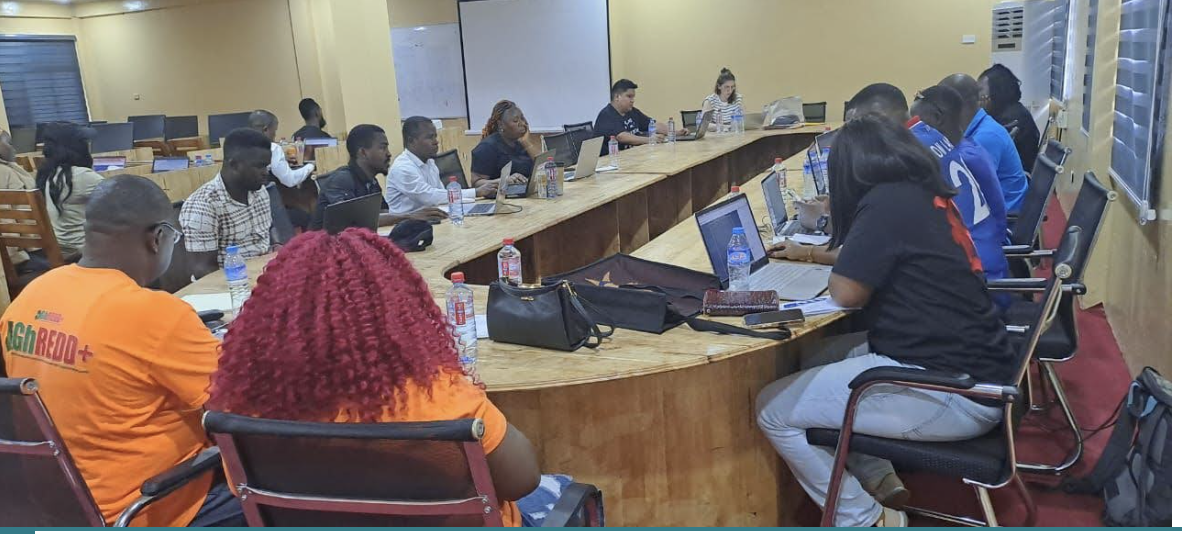
In January, Liberia submitted its second forest baseline, called a Forest Reference Level to the UNFCCC. CfRN provided full support to Liberia’s Forestry Development Authority (FDA) and the Environmental Protection Agency (EPA) to get them to their submission. CfRN conducted in-country data collection sessions with the teams in December 2025 in preparation for the submission. In February, the CfRN technical team conducted further capacity-building training. Technical teams received training in the application of CfRN’s Land Use Analysis (LUA) app to support consistent, transparent, and efficient data collection and analysis.
Liberia’s rainforests are globally important because they contain more than 40% of the remaining Upper Guinean Forest, one of the world’s most threatened and valuable biodiversity hotspots. Although this forest ecosystem spans six West African countries, Liberia holds the largest remaining contiguous blocks, earning it the reputation as the “green heart” of the region and making it central to global conservation and climate efforts.
These forests play a major role in regulating the climate by acting as a powerful carbon sink. Liberia stores an estimated 1.5 gigatons of carbon, including nearly 100 million metric tons of “irrecoverable carbon” that would be impossible to replace by mid-century if lost.
Beyond carbon storage, the forests help stabilize local and regional climates by regulating rainfall and cooling the atmosphere, which is increasingly critical as West Africa faces intensifying climate stress.
Liberia’s rainforests are also extraordinarily rich in biodiversity and deeply tied to human well-being. They shelter iconic and endangered species such as the pygmy hippopotamus, western chimpanzee, and some of the world’s rarest antelopes and monkeys, along with thousands of endemic plant species.
At the same time, these forests provide vital ecosystem services, supplying fresh water to over a million people and supporting the livelihoods of roughly 70% of Liberia’s population through food, medicine, and income.
February’s training sessions covered a broader number of land-use categories recommended by the IPCC and assessed land-use change in the whole country for the first time. This represents a substantial improvement over previous efforts, which were limited to two priority landscapes and focused only on forest/non-forest dynamics.
CfRN continues to work with the Liberian teams, conducting ongoing quality assurance and quality control (QA/QC) procedures to validate and refine the collected data, ensuring alignment with UNFCCC reporting requirements.
Through these efforts, and continued collaboration between the FDA and EPA, Liberia is strengthening its technical capacity to develop robust, credible, and internationally compliant forest reference levels.