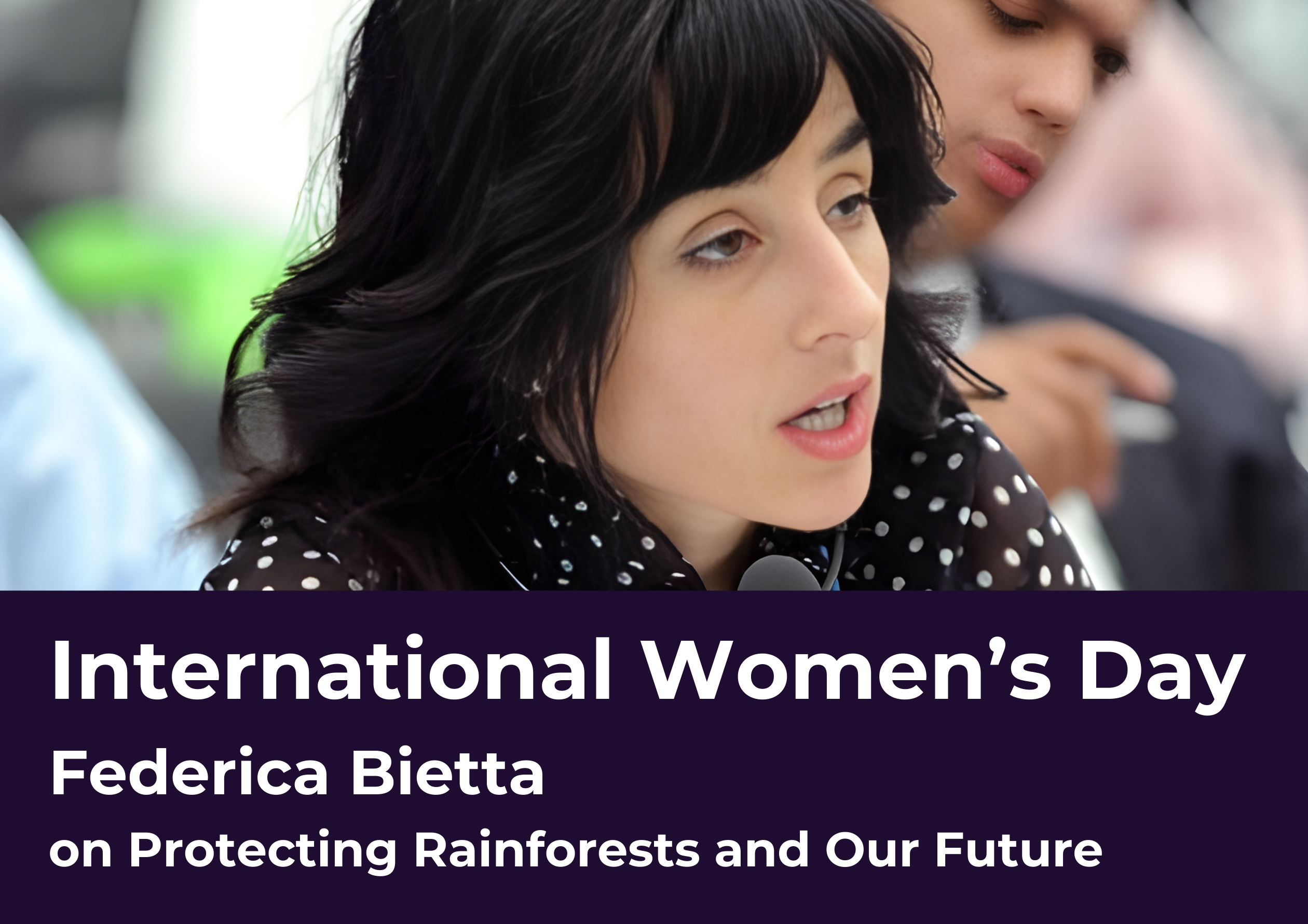
International Women’s Day
Federica Bietta
on Protecting Rainforest and Our Future
For Federica Bietta, the path to global climate leadership began with a childhood love of animals. What started as a personal passion eventually grew into a mission that would shape international climate policy and help elevate rainforest protection on the global stage.
On International Women’s Day, Bietta reflects on the moments that defined her journey, from a career in banking to decades of work alongside rainforest nations fighting to protect some of the planet’s most vital ecosystems.
What first inspired you to take on this mission?
My love for animals started everything. I’ve felt connected to them since I was very young. I once thought about becoming a veterinarian, but realized I wasn’t very good with blood. Coming from a family in banking, I followed that path instead.
But later I saw an opportunity to help animals by protecting their habitats. Habitat loss is the number one cause of biodiversity decline. Protecting rainforests means protecting the homes of countless species. I stepped away from my banking career thinking I would spend a few years working on this issue. It turned into a lifetime mission.
What was the turning point that changed everything?
In 2004, I organized a meeting in New York with Italian Ambassador Antonio Bernardini. I presented the idea that countries should be compensated for reducing emissions from deforestation. He immediately agreed that rainforest nations should not be expected to protect global forests for free and suggested bringing in other ambassadors. At that meeting, developed countries acknowledged that they would need to support rainforest nations financially, while rainforest countries said they would gladly protect forests if their people could earn a sustainable living without cutting them down. When we left that meeting, we realized something important had begun.
When did climate change become personal for you?
I grew up in Perugia, Italy, surrounded by forest. Even in summer the air was always cool. Then one year a wildfire swept through the forest during an unusually hot season. It was frightening.
Years later in New York, I saw similar changes, warmer winters, unusual temperatures, snow that melted almost immediately. Watching those changes over time was alarming. At some point you realize you have two choices: give up or do something about it. I chose to act.
What have rainforest nations taught you about leadership?
Leadership is about listening. It’s not about dictating solutions, it’s about building them together. Rainforest countries have shown incredible perseverance. Over the past twenty years there have been many challenges, complex negotiations, political pressures, difficult decisions. Yet they remain committed to protecting their forests and participating in the global climate process. That level of determination is deeply inspiring.
How difficult has the fight for rainforest conservation been?
Much harder than I expected. At the beginning it seemed simple because everyone agreed with the idea. But the details of international negotiations are always complicated. There were moments when progress felt painfully slow. What kept us moving forward was the passion behind the work and the determination of the countries involved.
What kept you optimistic during those slow moments?
The people. The Coalition for Rainforest Nations has an extraordinary team that never gives up. And the countries themselves are incredibly inspiring. During climate negotiations there is a real sense of camaraderie among ministers and negotiators from rainforest nations. Small victories, progress in negotiations or policies that prevent deforestation, remind us that change is possible.
What challenges did you face as a woman in climate diplomacy?
At first, it wasn’t only about being a woman. I was also a European representing rainforest nations in negotiations where their economies were at stake. I realized quickly that I needed to listen deeply and understand their realities. One of the most meaningful moments came when those countries expressed their trust in me to represent them. Together, step by step, we helped build what became the global framework for forest conservation. This is now enshrined in Article 5 of the Paris Agreement.
What message would you share with the next generation of women working to protect the planet?
FThis work is challenging, but it’s also deeply meaningful. Celebrate the small wins, the forests protected, the lives improved, the progress made. Those small victories eventually lead to the breakthroughs that change the world.ollow your heart. If you truly believe in something, go for it.
What gives you hope today?
What gives me hope is the commitment of rainforest countries themselves. Many genuinely want to protect their forests and build sustainable futures around them. We are at a critical moment, and financial support must come soon. But there is also a growing global community, people, companies, and governments, who want to protect our planet. Together, I believe we can still make meaningful progress and safeguard the world’s rainforests for future generations.
If you would like to support us on International Women’s Day, please donate.
Regards,
Mark Grundy
Director of Development & Communications
CfRN