Country Newsletter, Sept 2026
For over 20 years, the Coalition for Rainforest Nations (CfRN) has empowered rainforest countries to transform forest protection into national climate action, unlocking solutions that benefit people, nature, and the planet.
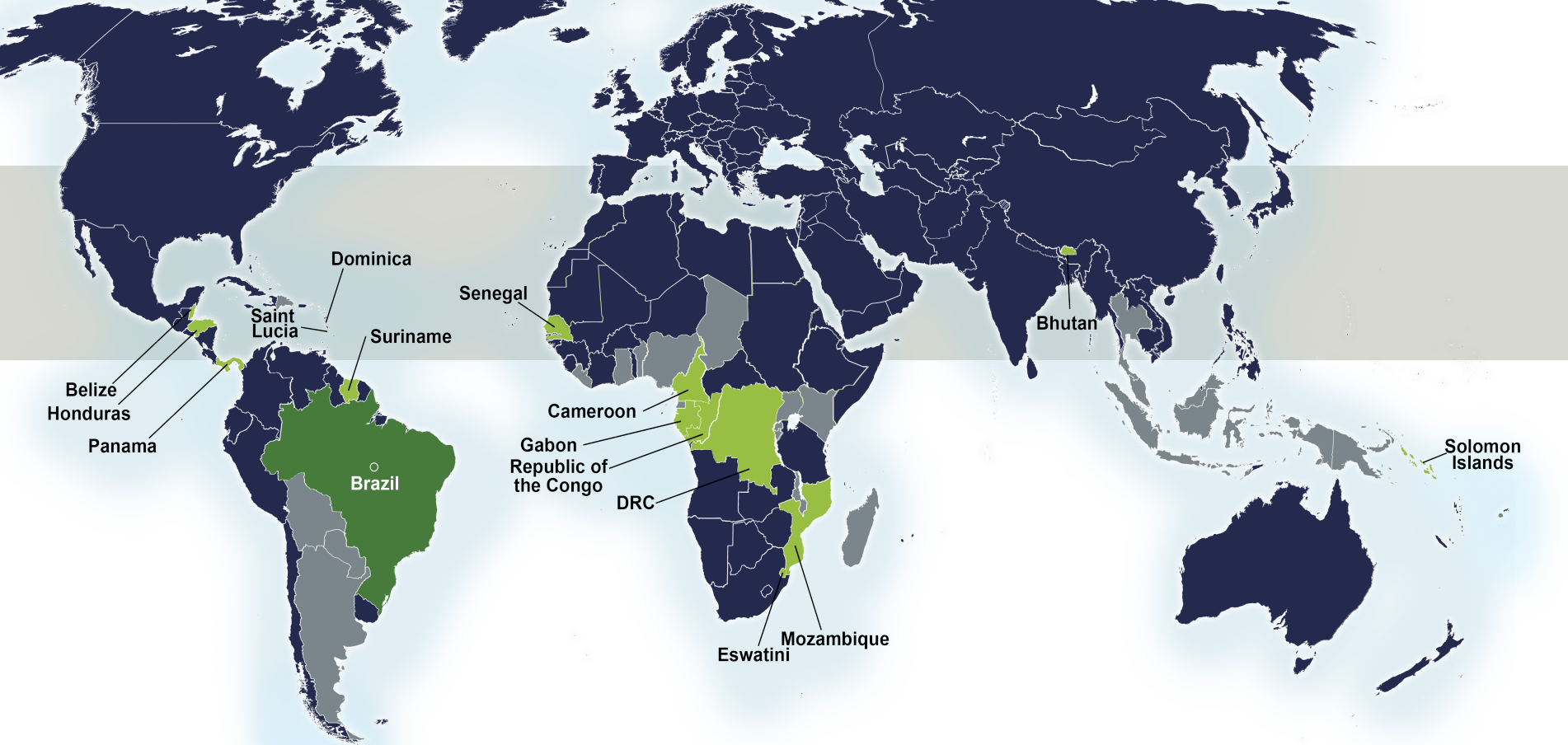
Between April and June 2026, CfRN delivered support across Belize, Bolivia, Cameroon, the Democratic Republic of the Congo, Eswatini, Honduras, Liberia, the Solomon Islands, and Suriname.
From advancing national priorities and climate finance opportunities to supporting negotiations at the SBSTA Bonn Conference and hosting the influential REDD+ Finance Day, the quarter was marked by progress, partnership, and impact.
Read on to discover the latest updates:
Belize Expands REDD+ Reporting and Forest Monitoring Systems
Belize continued to advance its REDD+ and climate reporting efforts with technical assistance from the Coalition for Rainforest Nation (CfRN) focused on measurement, reporting and verification (MRV), REDD+ reporting and preparation for Biennial Transparency Report (BTR) reviews. Support was provided to the Ministry of Sustainable Development, Climate Change and Solid Waste Management.
Belize reported REDD+ results totaling 7,928,056 tonnes of carbon dioxide equivalent (tCO2e) for 2021 and 2022. Assessments for 2023, 2024 and 2025 remain underway as activity data collection continues.
MRV systems are the technical frameworks used to measure greenhouse gas impacts, report results transparently, and verify information through independent review processes. Robust MRV systems are fundamental to REDD+ implementation and results-based finance.
Technical assistance during the quarter contributed to the preparation of a modified Forest Reference Level (FRL), development of the country’s second REDD+ Technical Annex 2021-2022, uncertainty analysis, preparation for the BTR review process, and planning of future activity data collection. A FREL serves as the benchmark against which a country’s REDD+ performance is measured.
Finally, CfRN’s executive leadership team visited Belize in June to meet with the Prime Minister of Belize, Hon John Antonio Briceño, and the Minister of Sustainable Development, Climate Change and Solid Waste Management, Hon. Orlando Habet, to discuss private finance opportunities for Belize.
Bolivia Strengthens Transparency Capacity Ahead of First Biennial Transparency Report
During the second quarter of 2026, the Coalition for Rainforest Nations (CfRN) continued supporting Bolivia’s preparation for the Paris Agreement’s Enhanced Transparency Framework (ETF). The work focused on strengthening national capacity to understand reporting requirements, implementation timelines, and the technical expert review process associated with international climate reporting.
Support was provided to Bolivia’s Ministry of Environment on preparation of the country’s upcoming Biennial Transparency Report (BTR). The BTR is the principal reporting document through which countries communicate greenhouse gas emissions, climate actions, progress toward Nationally Determined Contributions (NDCs), and support needs under the Paris Agreement.
The Enhanced Transparency Framework was established under Article 13 of the Paris Agreement to create a common system for reporting climate action across all Parties. A key component of the framework is the technical expert review, where international experts assess the completeness, accuracy, and consistency of submitted information.
CfRN’s support is helping Bolivia build the institutional and technical foundations needed for future REDD+ participation while strengthening its broader climate transparency systems.
Cameroon Advances Forest Reference Level Review
CfRN continued working with Cameroon through support to the Ministry of Environment, Protection of Nature and Sustainable Development (MINPDED) and the National Climate Change Observatory (ONACC). Activities focused on revision of the Forest Reference Level and preparation for the associated technical assessment process.
Potential REDD+ results for 2021 and 2022 remain under evaluation pending validation of the revised Forest Reference Level.
The work includes estimating forest emissions and removals, preparing technical documentation and strengthening national capacity to engage with international reviewers. This process is an important step toward future REDD+ reporting and potential access to results-based finance.
Democratic Republic of Congo Advances Readiness for Article 6 Participation
CfRN provided technical support to the Democratic Republic of Congo’s Ministry of Environment and Sustainable Development on implementation of Article 6 of the Paris Agreement.
Activities focused on clarifying requirements associated with both Article 6.2 and Article 6.4 mechanisms. Article 6.2 governs bilateral or multilateral cooperation involving transferred mitigation outcomes between countries, while Article 6.4 establishes a centralized international carbon market mechanism supervised under United Nations processes.
Support also addressed development of institutional structures and national authorization procedures required for participation in future carbon market transactions. These governance arrangements are critical to ensuring transparency, environmental integrity and compliance with international requirements.
Eswatini Expands National Capacity Through LUA App Training
CfRN provided training on its Land Use Analysis (LUA) App to newly appointed technical staff from the Ministry of Tourism and Environmental Affairs (MoTEA).
The LUA App supports collection and analysis of activity data needed for forest and land-use monitoring. Such information forms a key input for estimating greenhouse gas emissions and removals associated with land-use change and forestry activities.
The training supports preparations for a second round of data collection covering the years 2023–2025.
Results generated from this effort could contribute to preparation of Eswatini’s REDD+ Technical Annex, updates to the Forest Reference Level and development of the greenhouse gas inventory required for its second Biennial Transparency Report.
Honduras Builds Foundations for Second Biennial Transparency Report
CfRN continued supporting Honduras through capacity building and technical assistance related to both Nationally Determined Contribution (NDC) reporting and Article 6 implementation. The support was provided to the Forest Management Unit of Climate Change within the Instituto de Conservación Forestal (ICF).
Work during the quarter focused on estimating greenhouse gas (GHG) emissions and removals for the 2024 inventory year. These estimates will provide important inputs for the country’s second Biennial Transparency Report as well as future REDD+ reporting.
A greenhouse gas inventory quantifies emissions and removals of gases such as carbon dioxide, methane, and nitrous oxide. These inventories form the scientific foundation for climate reporting under the United Nations Framework Convention on Climate Change (UNFCCC).
CfRN also assisted Honduras in strengthening institutional arrangements and preparing for its in-country BTR review process. The country’s REDD+ results for 2024 remain under development as data collection activities continue.
Liberia Strengthens REDD+ Data Quality and Forest Reference Level Development
CfRN continued supporting Liberia’s Forestry Development Authority (FDA) and Environmental Protection Agency (EPA) through quality assurance activities for forest monitoring data and revision of the national Forest Reference Level (FRL).
Quality assurance procedures help verify that forest monitoring datasets are accurate, consistent and suitable for international reporting. Reliable data are essential because REDD+ results must withstand technical scrutiny before they can be recognized internationally.
The Forest Reference Level serves as the benchmark used to estimate emissions and removals from forests over time. CfRN is assisting Liberia in preparing emissions estimates, drafting technical documentation and training national experts to respond effectively during technical assessments conducted under the UNFCCC.
These efforts strengthen Liberia’s readiness to report REDD+ results and participate in future results-based climate finance opportunities.
Solomon Islands Improves Forest Monitoring Data Quality
CfRN supported the REDD+ Section under the Forest Resource, Management and Technical Services Division of the of the Ministry of Forestry and Research in strengthening quality assurance procedures for forest monitoring data.
Quality assurance helps identify inconsistencies, improve reliability, and increase confidence in datasets used for national REDD+ reporting. Strong forest monitoring systems are essential for accurately measuring changes in forest carbon stocks and emissions.
Potential REDD+ results for the period 2018–2023 are being assessed and remain dependent on completion of the quality assurance process. The support provided during this quarter contributes to improved readiness for future reporting and validation activities.
Suriname Advances Article 6 Reporting and REDD+ Carbon Accounting
CfRN continued providing technical support to Suriname’s Ministry of Spatial Planning and Environment and the Foundation for Forest Management and Production Control (SBB) as the country advances participation in Article 6 carbon market activities.
Suriname reported REDD+ results of 4.8 million tonnes of carbon dioxide equivalent (tCO₂e) for 2021 and has initiated work on a cooperative approach under Article 6 involving the potential transfer of a portion of these results as Internationally Transferred Mitigation Outcomes (ITMOs).
Article 6 of the Paris Agreement establishes mechanisms that allow countries to cooperate in achieving climate targets. ITMOs are internationally transferred emissions reductions that may be traded between countries under agreed accounting rules to ensure environmental integrity and avoid double counting.
During the quarter, CfRN also conducted a technical assessment of European Space Agency (ESA) Above-Ground Biomass (AGB) data for Suriname. Above-ground biomass refers to the living vegetation above the soil surface and is a key indicator used to estimate forest carbon stocks. The analysis evaluated whether ESA-derived biomass datasets could strengthen national forest carbon accounting and REDD+ reporting systems
This work supports Suriname’s efforts to enhance data quality and credibility for both REDD+ reporting and future Article 6 transactions.
SBTA64 Bonn Conference Sets Course for COP31 Decisions While Key Climate Negotiations Remain Unresolved
BONN, Germany, June 2026 — The 64th sessions of the UNFCCC Subsidiary Body for Implementation (SBI) and Subsidiary Body for Scientific and Technological Advice (SBSTA), collectively known as SB64, concluded in Bonn after meetings held from 6–16 June 2026. The session served as a critical preparatory stage for COP31, with multiple agenda items expected to culminate in formal decisions later this year.
While negotiators advanced discussions across a broad range of issues, significant differences among Parties remain on several key topics, including the Global Goal on Adaptation (GGA), the Mitigation Work Program (MWP), the future role of the Adaptation Fund under the Paris Agreement, Just Transition negotiations, and matters related to research and systematic observation.
These issues will continue to be negotiated at the next UN climate session scheduled for November 2026 in Antalya, Türkiye.
Key Negotiation Tracks Expected to Feed into COP31
The following agenda items were identified as those most likely to result in decisions at COP31:
| Agenda Item | Subject |
| SBSTA 4(a) / SBI 10(a) | Global Goal on Adaptation (GGA) |
| SBSTA 5 / SBI 6 | Sharm el-Sheikh Mitigation Ambition and Implementation Work Programme (MWP) |
| SBSTA 6 / SBI 7 | UAE Just Transition Work Program (JTWP) |
| SBSTA 8 / SBI 9 | Sharm el-Sheikh Joint Work on Agriculture and Food Security (SJWA) |
| SBI 12(c) | Host of the Climate Technology Centre (CTC) |
| SBI 13(a) | Matters relating to the Adaptation Fund |
| SBI 15 | Action for Climate Empowerment (ACE) |
Mandated Events and Institutional Processes
SB64 also hosted a wide range of mandated dialogues, workshops, and meetings designed to support implementation of previous COP decisions and advance technical work streams. These included constituted body meetings, transparency-related activities, dialogues on agriculture, climate finance, response measures, oceans, and climate change, as well as workshops mandated by COP30:
| Category | Events Held at SB64 |
| Constituted Bodies | 15th FWG (LIPP); 14th KCI; 10th PCCB |
| Transparency | 20th Facilitative Sharing of Views; 3rd Facilitative, Multilateral Consideration of Progress; ETF Support World Café |
| GST | Annual GST NGO Dialogue; UAE Dialogue |
| Other Events | Oceans Dialogue; ACE Dialogue; 2nd SJWA In-Session Workshop; Article 6.2 & 6.8 Events; 18th Research Dialogue; Annual LCIPP Dialogue; 15th Durban Forum; SB Chair’s Observer Briefing |
| New Work Plans / Program | Gender Action Plan Events; Response Measures Technical Events |
| COP30 Mandates | Baku Adaptation Roadmap Workshop; Dialogue on Mountains and Climate Change; Climate Change and Trade Dialogue; In-Session LCIPP Workshop |
| COP30 Presidential Mandates | Veredas Dialogue; Work Programme on Climate Finance; Belém Mission 1 to 5; Global Implementation Accelerator |
The Coalition for Rainforest Nations (CfRN) reported active engagement in discussions related to the Global Stocktake (GST) and Article 6 of the Paris Agreement
On the Global Stocktake, CfRN emphasized that implementation of the first GST outcome must remain the priority in order to raise climate ambition and maintain alignment with the 1.5°C temperature goal. The coalition stated that discussions on the second GST process, which are expected to begin in Antalya, should build upon the COP30 “Global Mutirão” decision and the implementation of paragraph 34 from the first GST outcome.
Regarding Article 6.2, CfRN welcomed conclusions related to arrangements for funding infrastructure and highlighted recognition of the substantial financing gap affecting implementation, review processes, and capacity-building. The coalition expressed support for solutions capable of providing predictable and sustainable support without adding new financial burdens for developing country Parties.
On Article 6.8, CfRN noted progress achieved during the Bonn session and recommended an early conclusion of negotiations at the next session while maintaining the Non-Market Approaches (NMA) Platform and discussion forum. The coalition also called for development of a monitoring tool to strengthen oversight and continuous improvement of the NMA work programme.
REDD+ Finance Day Summit
The Rainforest Finance Summit 2026, held alongside the UNFCCC Heads of Delegations and REDD+ Focal Points meeting in Petersberg, Germany, brought together rainforest governments, financial institutions, UNFCCC officials, and private-sector partners to explore how REDD+ and Article 6 of the Paris Agreement can unlock large-scale financing for tropical forest conservation.
A key theme of the summit was that the existing Warsaw Framework for REDD+ and Paris Agreement rules already provide a robust foundation for environmental integrity, transparency, and accountability. Participants emphasized that the focus should be on building trusted market mechanisms and investment pathways, rather than creating new carbon standards.
Discussions centered on developing high-integrity sovereign forest carbon markets, with verified national REDD+ emission reductions positioned as a potential new asset class capable of attracting significant private and institutional investment. Topics included carbon credit integrity, safeguards, monitoring systems, permanence, and engagement with Indigenous Peoples and local communities.
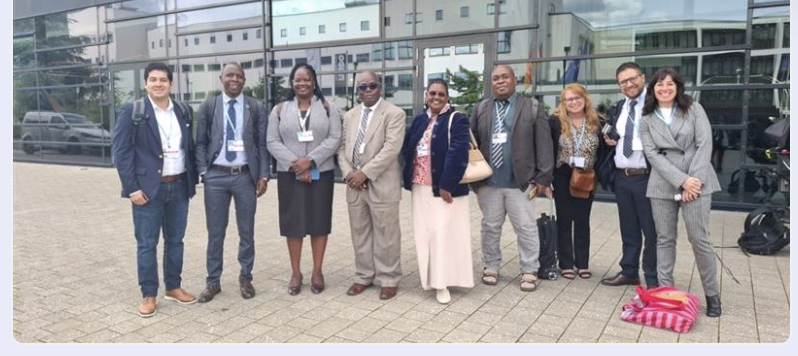
The summit featured contributions from the Coalition for Rainforest Nations (CfRN), Deutsche Bank, Nasdaq, ITMO Limited, and the UNFCCC Secretariat, alongside country presentations from Suriname, Honduras, Liberia, and the Solomon Islands.
It concluded with a call for stronger collaboration between rainforest nations and the private sector to accelerate funding for forest protection and climate action under the Paris Agreement.
Looking Ahead to Antalya and COP31
SB64 demonstrated continued commitment by Parties to advance implementation of the Paris Agreement, but it also underscored the complexity of achieving consensus on several politically significant issues. With negotiations on adaptation, mitigation, finance, and just transition still far apart, the Antalya session in November will be an important opportunity to narrow differences before decisions are considered at COP31.
For governments preparing for COP31, the Bonn outcomes indicate that adaptation ambition, implementation finance, Article 6 operationalization, and delivery of Global Stocktake commitments will remain among the most consequential issues on the multilateral climate agenda